Dividends: How They Work and How People Use Them
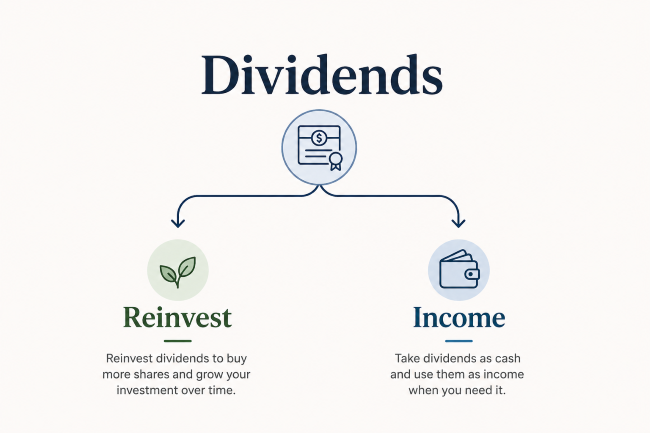
When a company (or fund) pays out part of its earnings to shareholders, it’s called a dividend.
Dividends can come from individual stocks as well as mutual funds, index funds, and ETFs. How often they’re paid can vary—some pay monthly, others quarterly or annually.
Some people choose to take dividends as cash and use them as part of their income. Retirees often do this as part of their overall income plan. Others prefer to reinvest dividends back into the investment that paid them, buying more shares and allowing their investment to grow over time. This is often set up automatically through a dividend reinvestment plan (DRIP).
Understanding how dividends affect the price of an investment can also be helpful. When a dividend is paid, the value of the investment is reduced by roughly the same amount. It’s not extra money being created—it’s part of your investment being paid out.
Some investments focus more on paying dividends, while others focus more on growth. Neither approach is better in all situations. What matters is how the investment fits into your overall plan and how you choose to use it.
Here to make everyday money decisions easier,
Better Money Solutions
