How to Think About Market Headlines
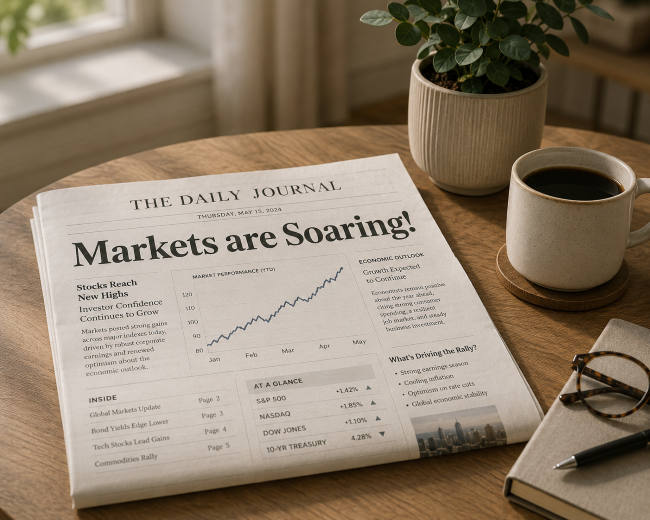
Market headlines are designed to do two things: inform people and capture attention. News organizations compete for clicks, views, and engagement, which often leads to dramatic language and emotionally charged stories.
Words like “surging,” “crashing,” “plunging,” or “soaring” can make routine market movements feel much more urgent than they may actually be in the bigger picture.
While headlines may accurately describe short-term market activity, long-term investing is usually built around much longer time horizons. Daily or weekly market movements often have very little impact on an investment plan designed to span decades.
This creates a disconnect between financial media and long-term investors. Headlines focus heavily on what is happening right now, while many investors are saving and investing for goals that may be 10, 20, or even 30 years away.
That does not mean market news should be ignored entirely. Economic conditions, interest rates, company earnings, and world events can all matter. But reacting emotionally to every headline can make it difficult to stay consistent with a long-term plan.
For many investors, it can be more helpful to focus on things they can actually control:
understanding why they are invested the way they are
maintaining an allocation they are comfortable with
keeping appropriate cash reserves
and continuing consistent habits during both strong and weak markets
Market headlines will always exist, and periods of uncertainty are a normal part of investing. Understanding your own goals and risk tolerance can often matter far more than trying to react to every piece of financial news.
Here to make everyday money decisions easier,
Better Money Solutions
