What Is Short Selling?
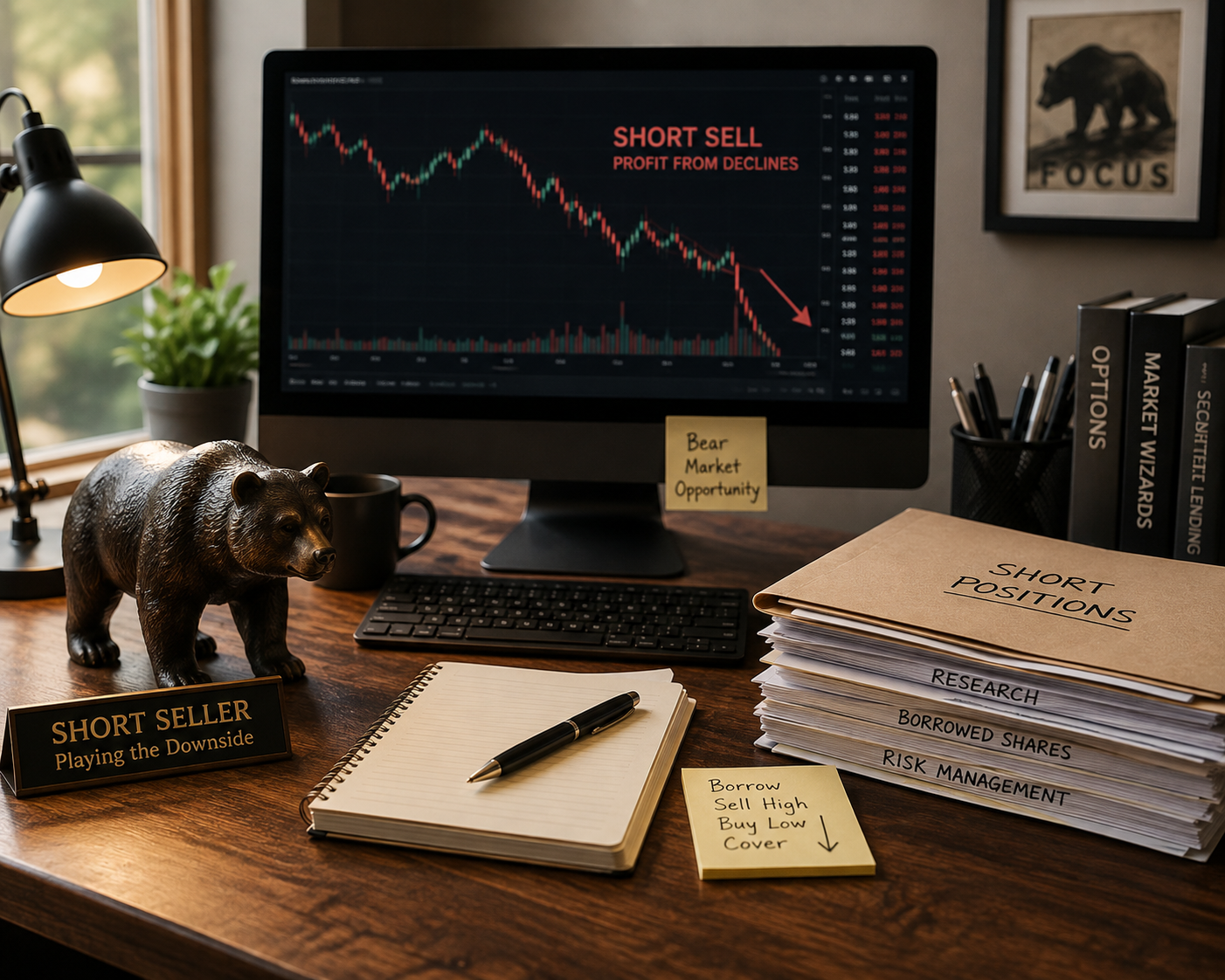
Most investors hope the value of their investments will rise over time. Short selling is different. It's a strategy that attempts to profit when the price of a stock falls.
At first, the idea can seem confusing because you're selling something before you own it. The easiest way to understand short selling is to think of it as borrowing first and buying later.
Here's a simplified example.
Suppose a stock is trading at $100 per share. You believe its price is going to decline, so you borrow one share from your brokerage firm and immediately sell it for $100.
A few weeks later, the stock falls to $70. You buy one share for $70 and return it to the lender. Because you sold it for $100 and bought it back for $70, your profit is $30, before fees and interest.
This final purchase is called buying to cover because you're buying the borrowed shares back so they can be returned to the lender.
Of course, things don't always go as planned.
If the stock rises to $130 instead, you still have to buy a share to return it. In that case, you would lose $30 because you sold it for $100 but had to buy it back for $130.
One of the biggest differences between buying a stock and short selling is the amount of risk involved. When you buy a stock, the most you can lose is the amount you invested if the stock falls to zero. With short selling, however, there is theoretically no limit to how high a stock can rise, meaning potential losses are unlimited.
Because of this risk, short selling requires a margin account. A margin account allows you to borrow securities and money from your brokerage, but it also requires you to maintain enough assets to support the position.
If the stock price continues to rise and your losses become too large, your brokerage may issue a margin call. This means you'll be required to deposit additional cash or securities into your account. If you don't, the brokerage may close your position by purchasing the shares for you, regardless of the price.
Another factor many investors don't realize is that borrowed shares don't belong to you forever. The lender has the right to request them back. If that happens, your brokerage may require you to close your short position sooner than you planned, even if you still believe the stock will eventually decline.
Short selling is one way some investors attempt to profit from falling stock prices, but it carries significantly more risk than simply buying and holding investments. Understanding how it works can make financial news easier to follow, even if it's not a strategy you ever plan to use.
Here to make everyday money decisions easier,
Better Money Solutions
