What Is a Bond?
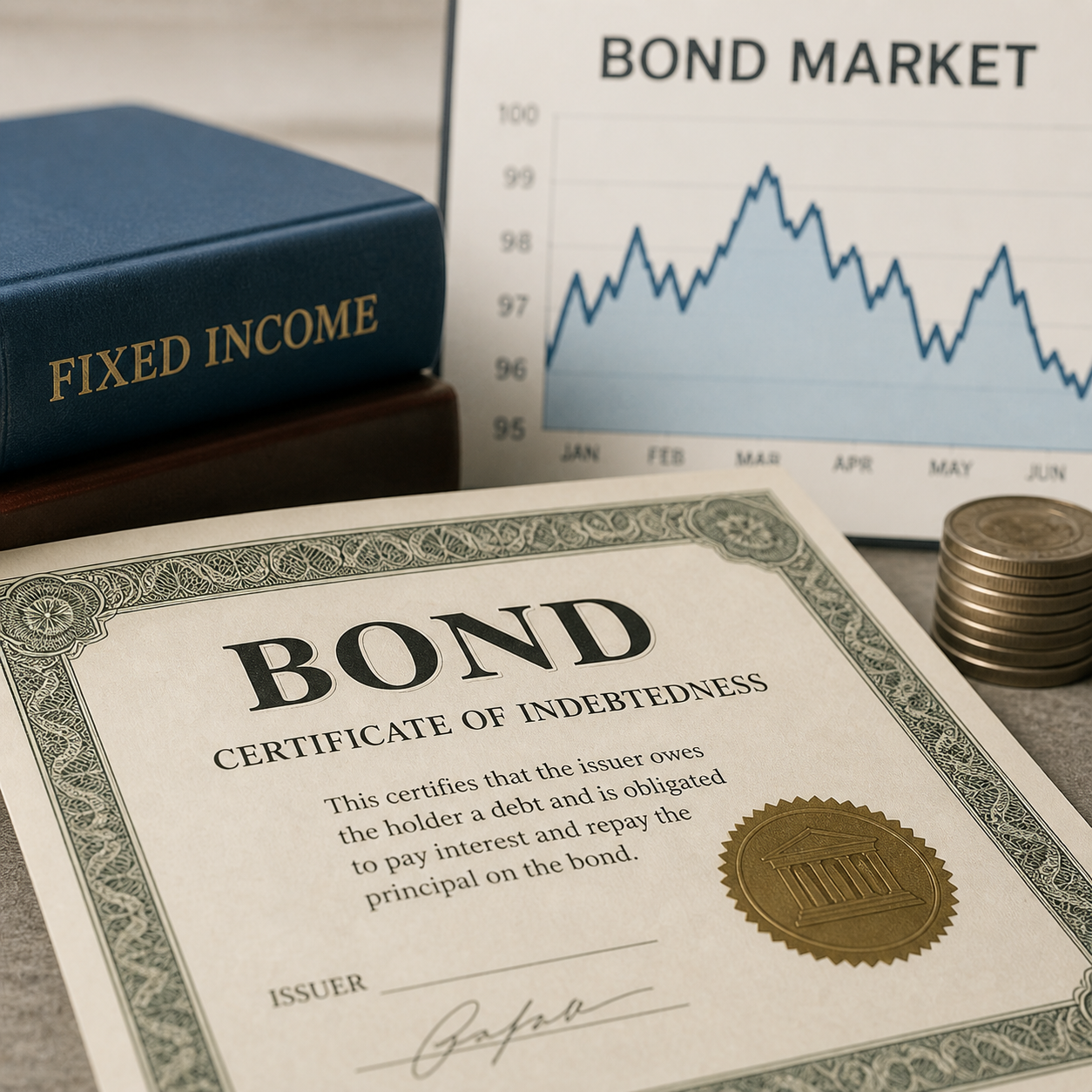
In its simplest form, a bond is a loan. When you own a bond, you are the lender.
As the owner, you are lending to governments—such as local or U.S. government entities—or to companies that need capital for ongoing expenses or future projects.
As you know, when you take out a loan, you pay interest to the lender. With bonds, it works in reverse—the issuer of the bond pays you interest. This is often referred to as the bond’s yield.
People include bonds in their portfolios for several reasons. Bonds generate payments to the holder, and like dividends, those payments can either be reinvested to help grow the investment or used as income.
Bonds are also generally more stable than stocks. Including them in a portfolio can help smooth out some of the ups and downs that come with stock market movements.
It can also be helpful to understand what affects the value of a bond.
One of the main factors is interest rates. When interest rates rise, the value of existing bonds tends to fall. When interest rates fall, the value of existing bonds tends to rise. This happens because new bonds are issued at current rates, which can make older bonds more or less attractive by comparison.
You don’t need to follow these changes closely, but it helps to understand that bond values can move, even though they are often considered more stable than stocks.
When you step back, bonds are typically used to provide stability and income within a portfolio. They don’t usually offer the same growth potential as stocks, but they can play an important role in balancing overall risk.
Here to make everyday money decisions easier,
Better Money Solutions
